
Gallery
A Fine Louis XVI Style Gueridon with Sèvres Style Porcelain Plaques
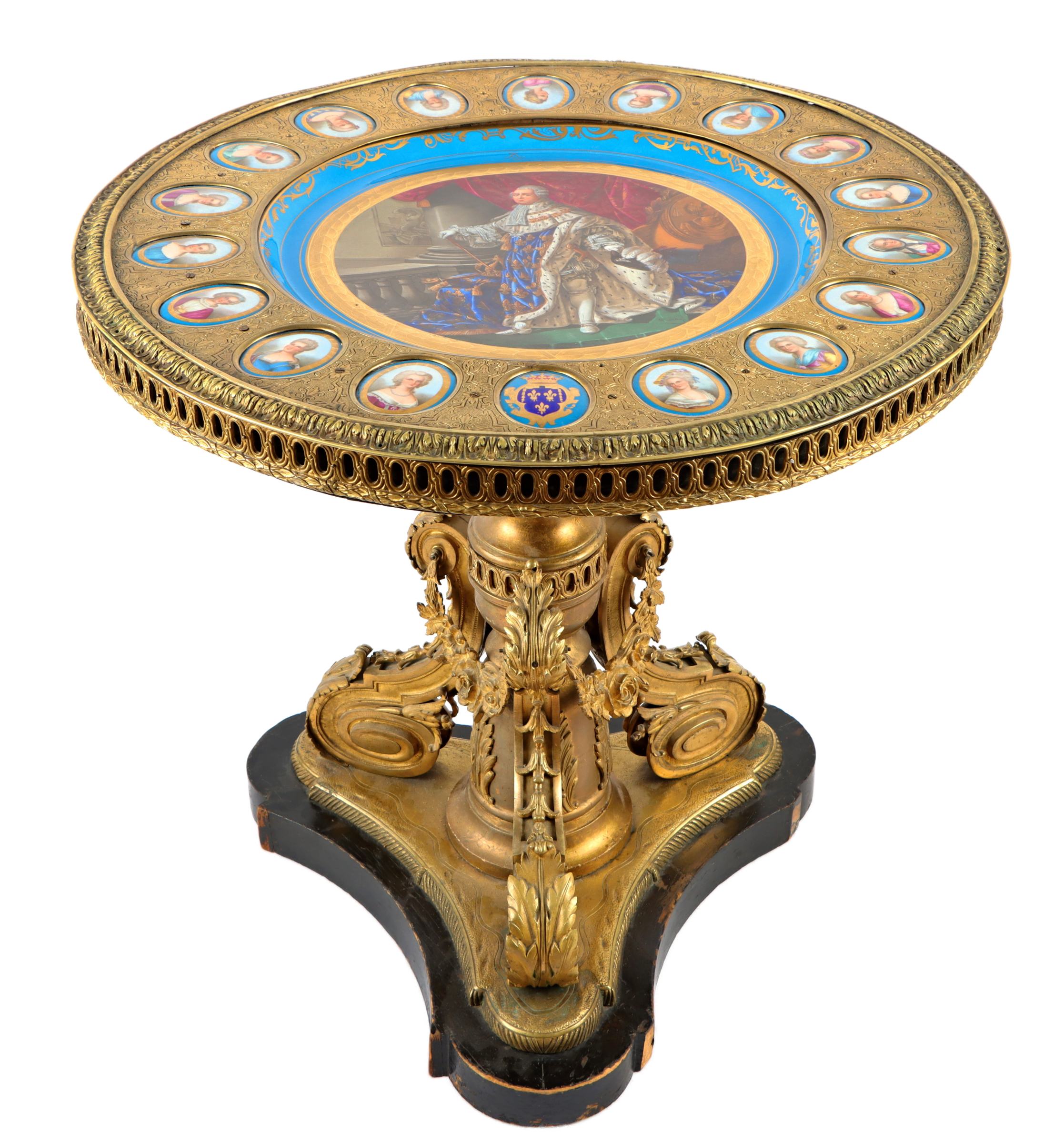
An exceptionally decorative and highly collectible salon table in the style of the productions of the Manufacture nationale de Sèvres.
This piece represents a distinguished example of luxurious French historicism from the Napoleon III period, intended for aristocratic interiors and collectors’ collections.
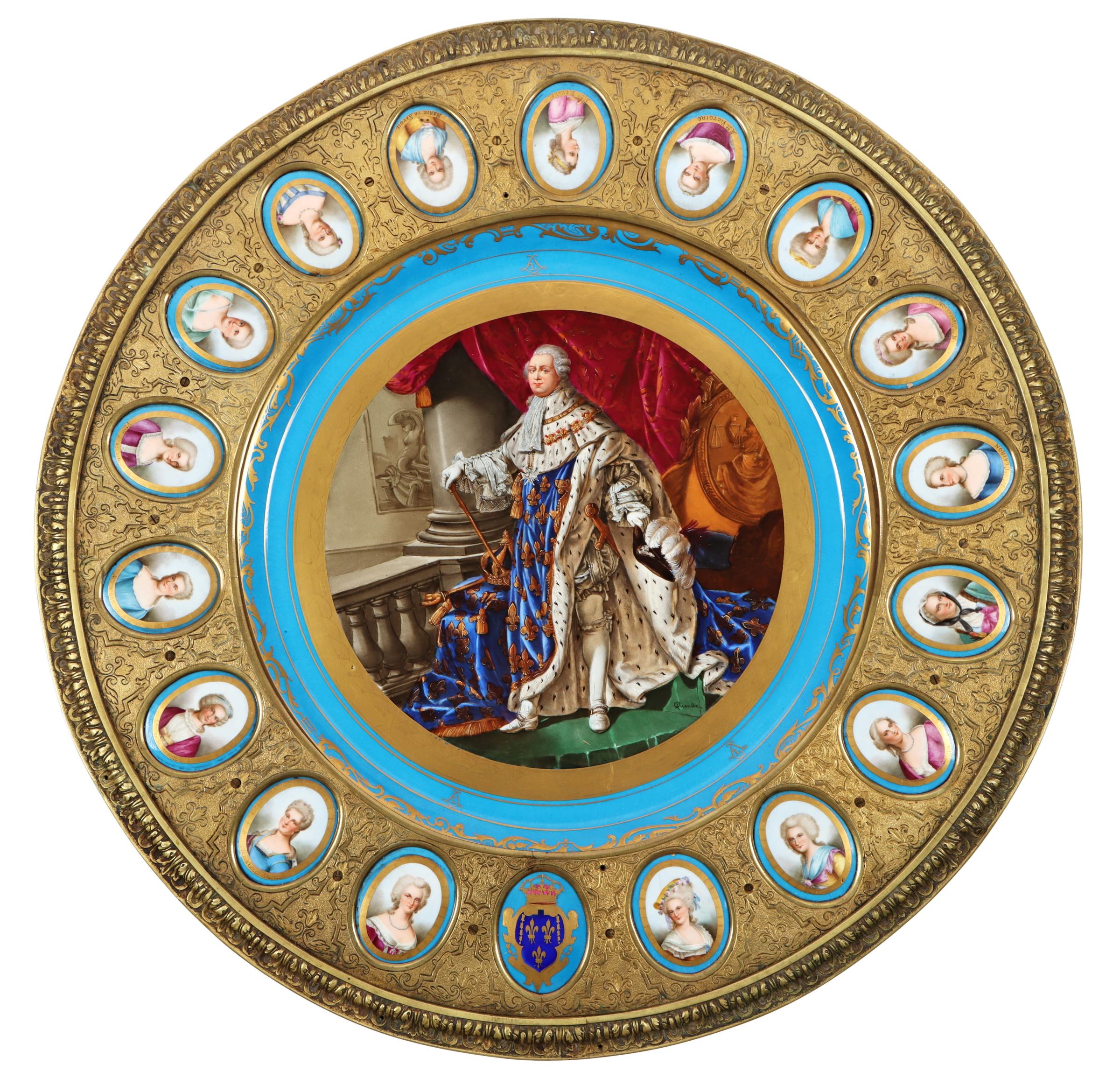
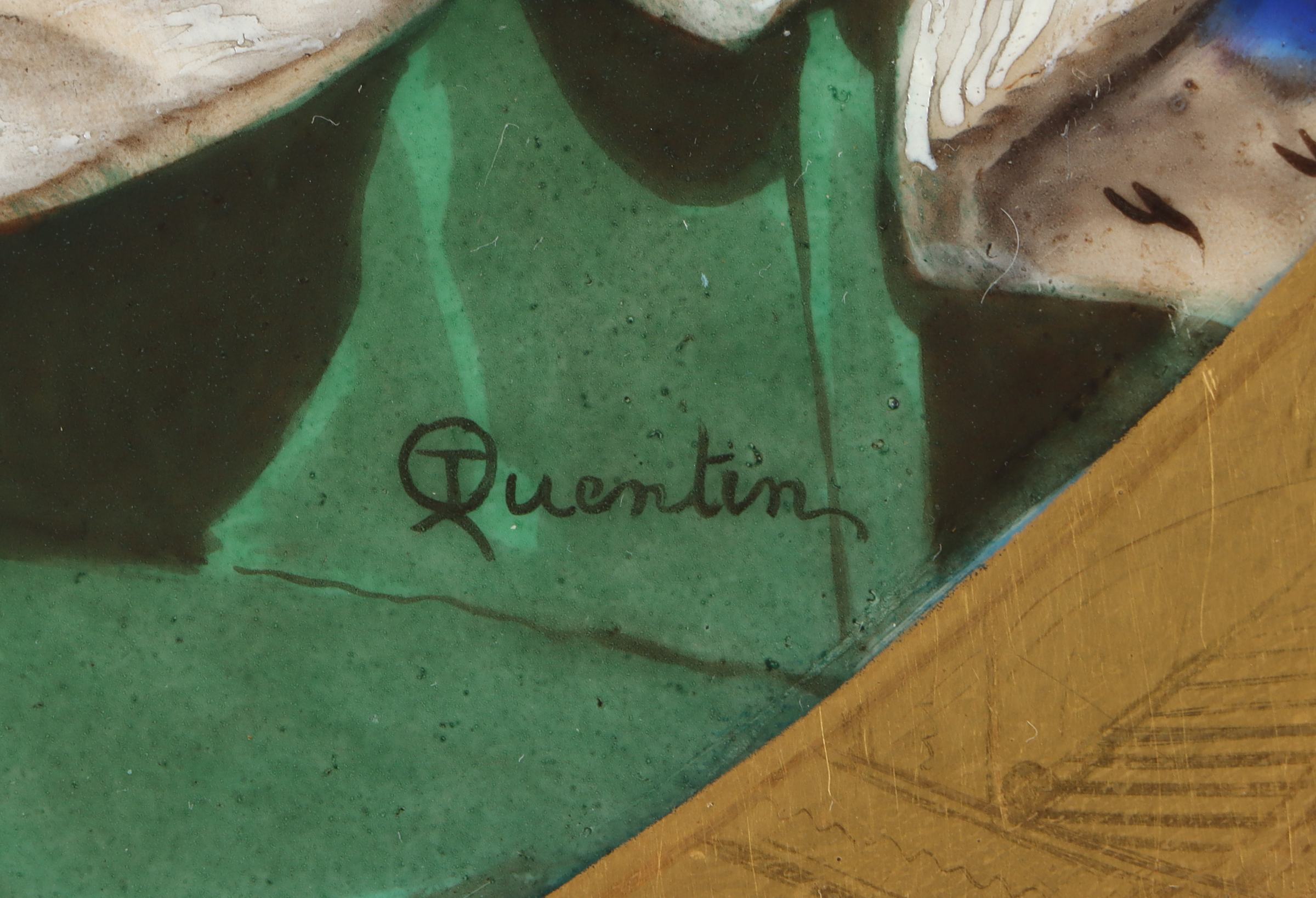
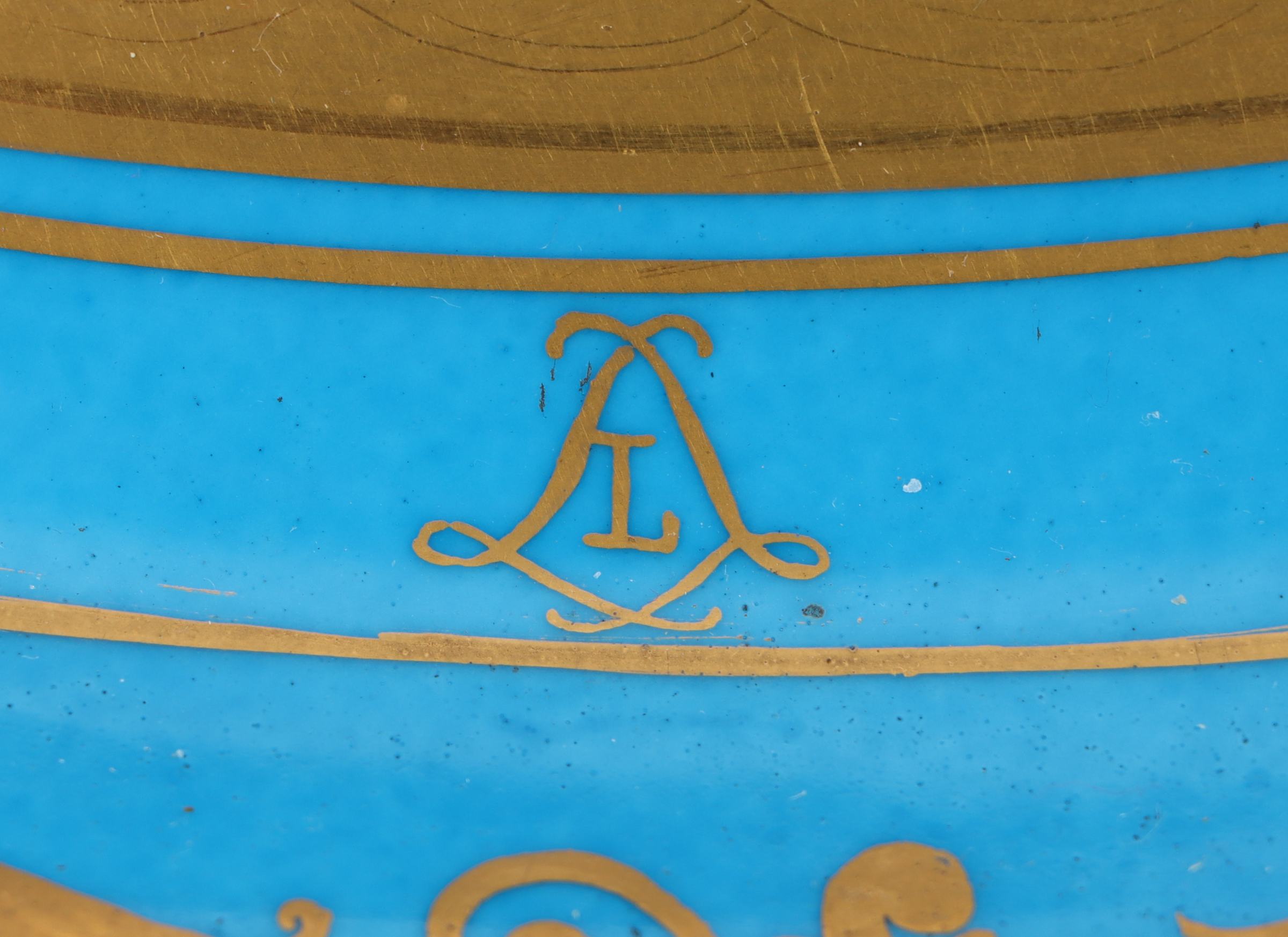
France, second half of the 19th century. The salon table with a circular top is conceived as a central pictorial field featuring a large-format porcelain plaque decorated with a portrait painting of the French king Louis XV in coronation robes with an ermine mantle and regalia. Surrounding the central motif runs a wide band of turquoise-blue ground with gilded ornamentation and three painted Sèvres marks; the painting is signed T. Quentin.
The perimeter is further enriched with a series of 18 oval porcelain miniatures, 17 of which depict portraits of royal ladies-in-waiting, while one miniature is adorned with a heraldic motif featuring fleurs-de-lys, reinforcing the representative monarchical iconography of the ensemble.
The base is made of ebonized and partially gilded wood, richly mounted with bronze elements featuring volutes, acanthus leaves, and elaborately modeled appliqués. The tripartite base stands on three casters for easier handling.
Overall dimensions: 77 × 88 × 88 cm.