
Gallery
Rudolf Kremlička (1886 – 1932)
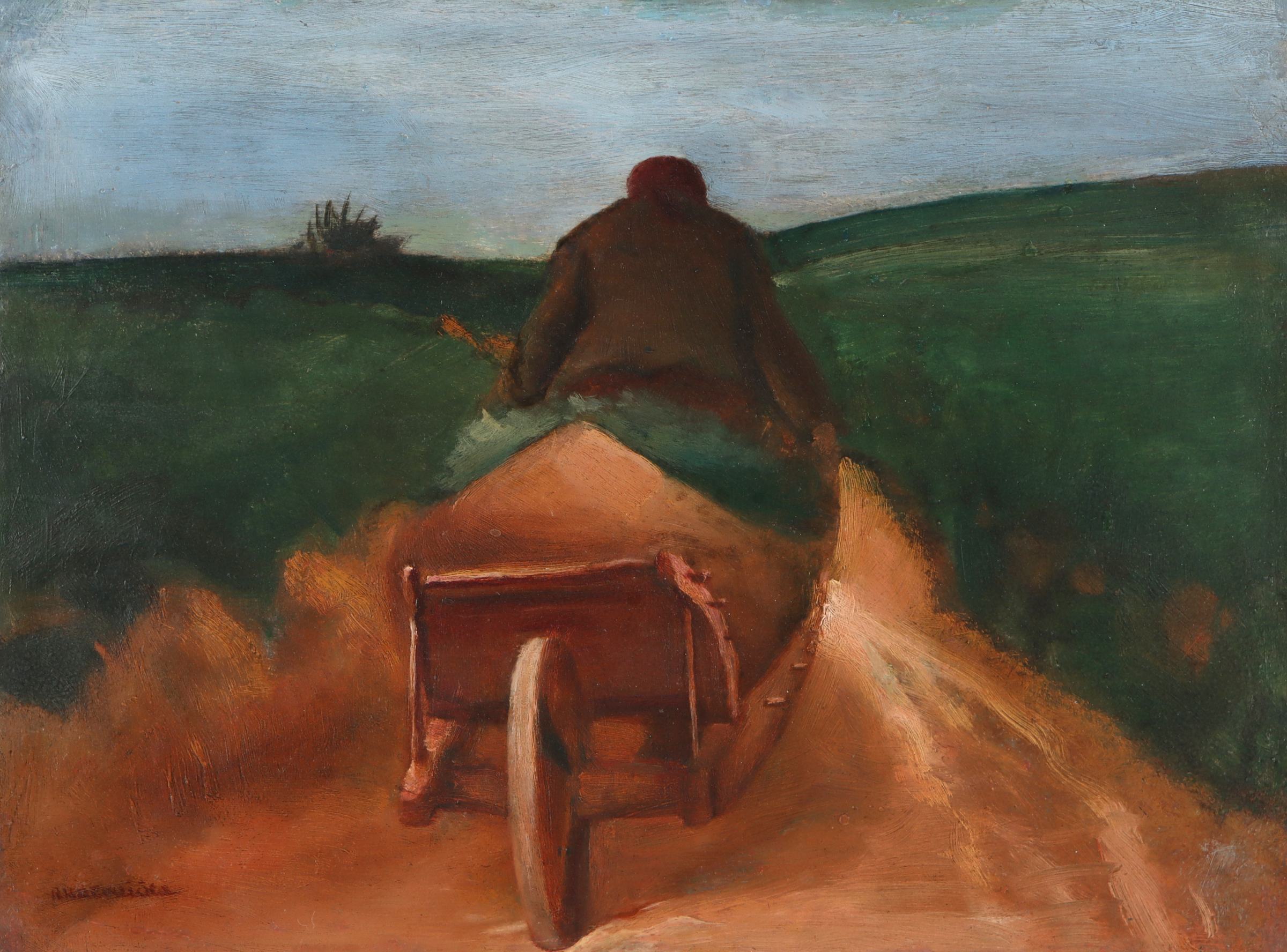
In the cart track, 1917, oil on panel, signed lower left Kremlička, painting dimensions 24.5 × 33 cm, framed.
The authenticity of the work was consulted with and confirmed by PhDr. Karel Srp.
Expert opinion: PhDr. Rea Michalová, Ph.D.
Excerpt from the expert opinion:
In the Cart Track is an original and collector’s rarity by Rudolf Kremlička, a work of remarkable painterly synthesis that brilliantly encapsulates the artist’s first creative period while already pointing toward modernism. Kremlička belongs to the founding generation of Czech modern art and ranks among its most important painters. Though his oeuvre is not extensive, he displayed extraordinary insight into the sensuous world of women as well as the essential character of landscape, genre painting, and portraiture.
Rudolf Kremlička was uniquely able to unite classical tradition with a new modern visual language. His work was admired even by Karel Teige, the leading theoretician of the emerging avant-garde, who wrote appreciatively about him even at a time when he was otherwise proclaiming the end of easel painting. Teige did not hesitate to place Kremlička among the leading figures not only of Czech art, but of modern art more broadly.
The present painting, In the Cart Track, is an especially compelling work for collectors, representing Kremlička’s unmistakable movement toward a consciously modern artistic vision.
Kremlička’s rapid artistic maturation before the middle of the 1910s was undoubtedly shaped by his several-month stay in St Petersburg at the turn of 1913–1914. After this journey, his painterly language developed with remarkable speed. By 1917, when In the Cart Track was painted, he was already in close contact with Václav Špála, Josef Čapek, Vlastislav Hofman and Jan Zrzavý, with whom he would found the group Tvrdošíjní in 1918. Encouraged by these friendships and by the artistic ambitions of his circle, he moved away from his earlier “old master” manner toward a new synthetic conception, marked by fluid, softened brushwork and a more intense emphasis on colour.
Kremlička’s path toward modernity is eloquently demonstrated by the existence of three known variants of In the Cart Track. The earliest version, measuring 23 × 26 cm (National Gallery Prague, inv. no. O 12677), was painted as early as 1914 during the artist’s stay in Kameničky, a place closely associated with Antonín Slavíček. It was reproduced in the journal Zlatá Praha (vol. XXXI, 1914, no. 36, p. 428; available online).
In keeping with his artistic integrity, Kremlička often returned to subjects of particular personal importance, developing them in several versions. This was also the case with the motif of a country woman pulling a large wheelbarrow uphill, a scene he undoubtedly observed in situ during his stay in the Bohemian-Moravian Highlands. In 1917, after three years, he returned to Kameničky. This would be the last time he engaged with rural genre scenes, using them as a means of working his way toward a modern mode of expression. It was then that the two further versions of In the Cart Track were created. While the second version (oil on canvas and board, 32 × 37 cm, 1917, private collection; sold in 2012 at Prague Auctions) remains fully indebted in its impressionistic character to Antonín Slavíček, the present work—clearly the third version—is distinguished by a synthetic painterly vision expressed through broad forms and a new, sensuous treatment of colour. The colour is enveloped in a kind of misty haze, a lyrical quality characteristic of Kremlička’s finest works.
In the present painting, little remains of Kremlička’s earlier social genre mode. The simplified figure of an old woman in a headscarf, seen from behind, moves heavily through the landscape, yet there is nothing sentimental about the scene. Joined to her wheelbarrow, the figure merges beautifully with the landscape rather than standing apart from it. Here the artist’s primary concern is with the artistic values of colour and light, rather than with symbolising hardship or the “sad landscape” still suggested in the second version of the composition.
Other products
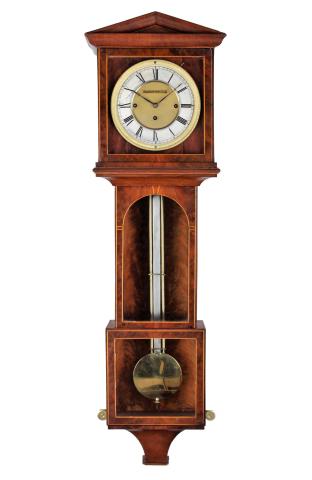
Miniature wall clock - Laterndluhr
Wall-mounted pendulum clock, so-called lantern clock, circa 1830, Vienna; dial signed I. Vlaschitz in Wn. Neustadt (Ignatz Vlaschitz in Wien Neustadt).
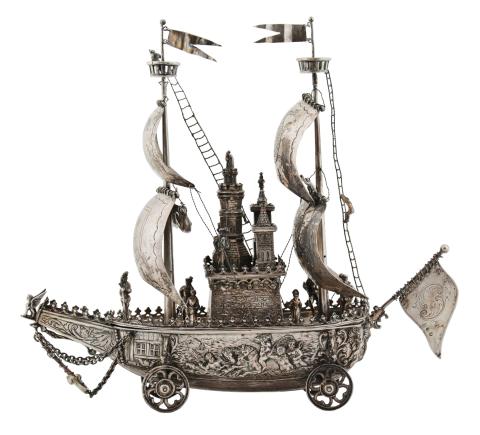
Silver model of a ship with figural decoration
Germany, Hanau, 19th century. Two-part silver model of a ship with rich figural and sculptural decoration, comprising a total of 12 figures.
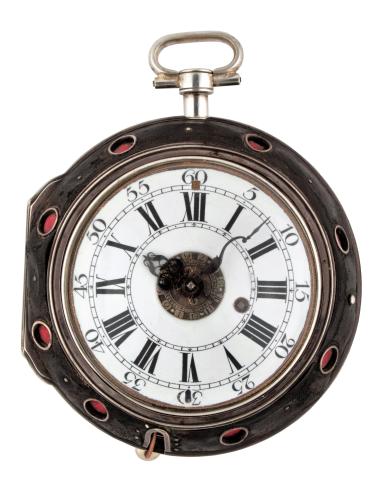
Large Baroque carriage clock – Joseph Spiegel
Germany, Friedberg, Joseph Spiegel (Joseph Miroir), circa 1740. Large double-cased traveling striking clock with date display and alarm.
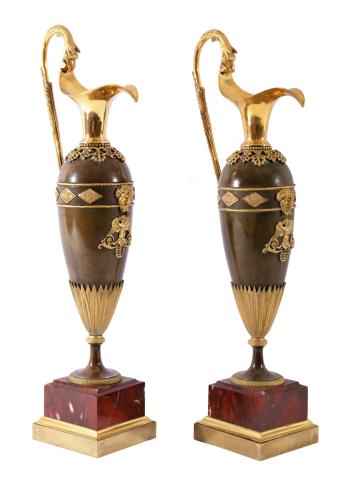
Pair of Empire teapots – Claude Galle
France, Paris, circa 1810. A luxurious pair of bronze ewers produced in the renowned workshop of Claude Galle (1759–1815).