
Gallery
Arnold Clementschitsch (Austria, Villach, 1887–1970)
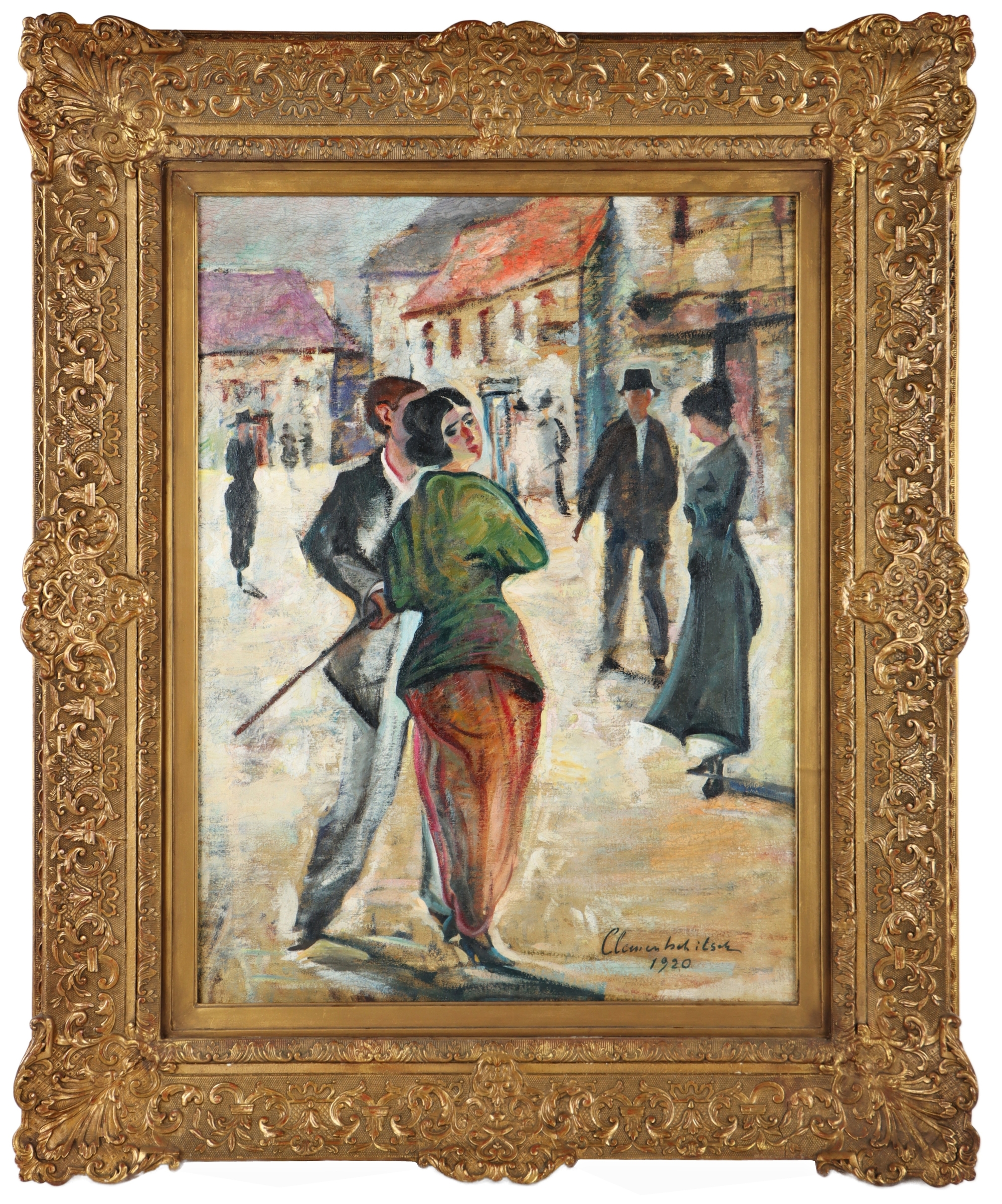
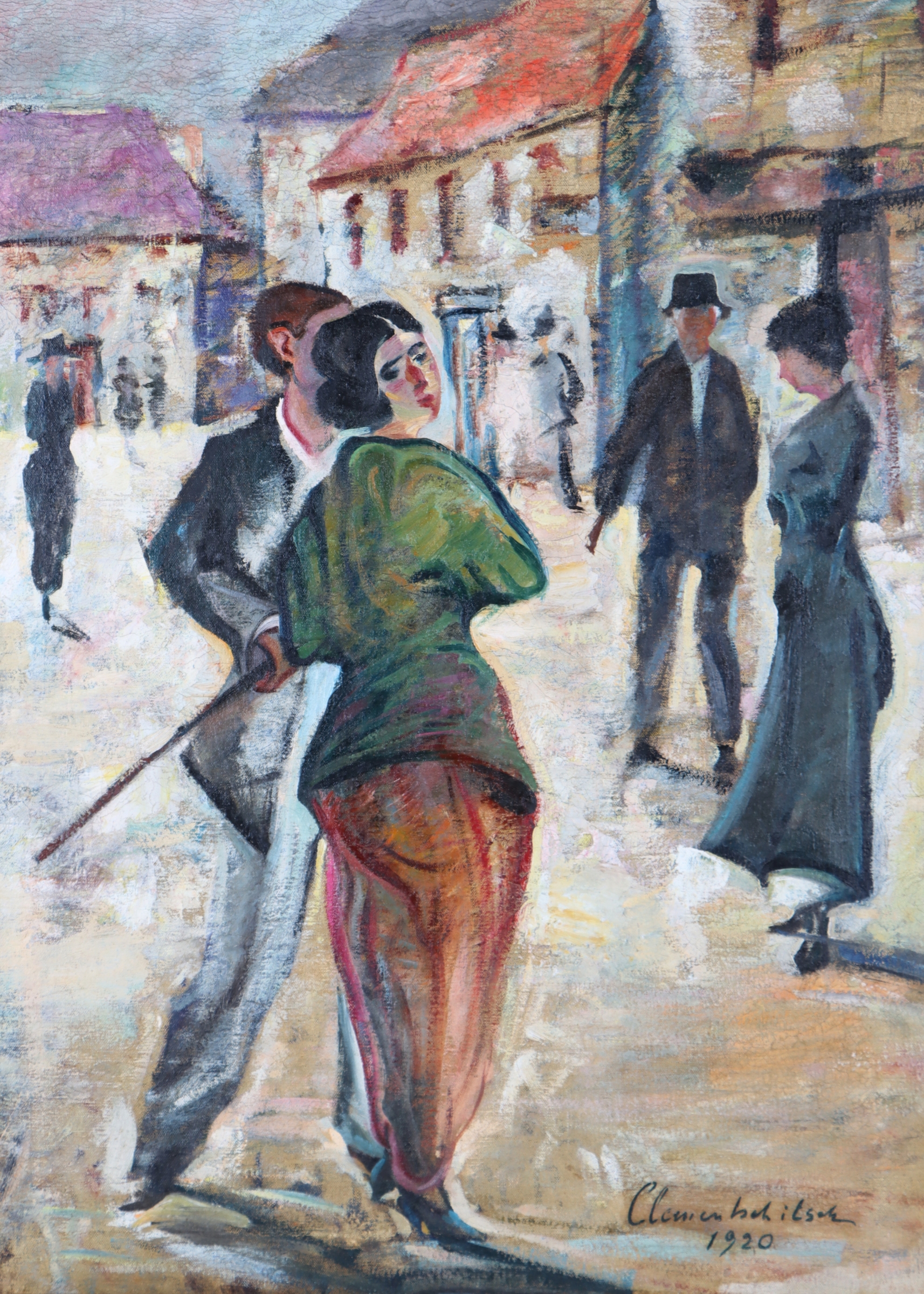
Title: Street Scene
Date: 1920
Technique: Oil on canvas
Painting dimensions: 80.5 × 60 cm
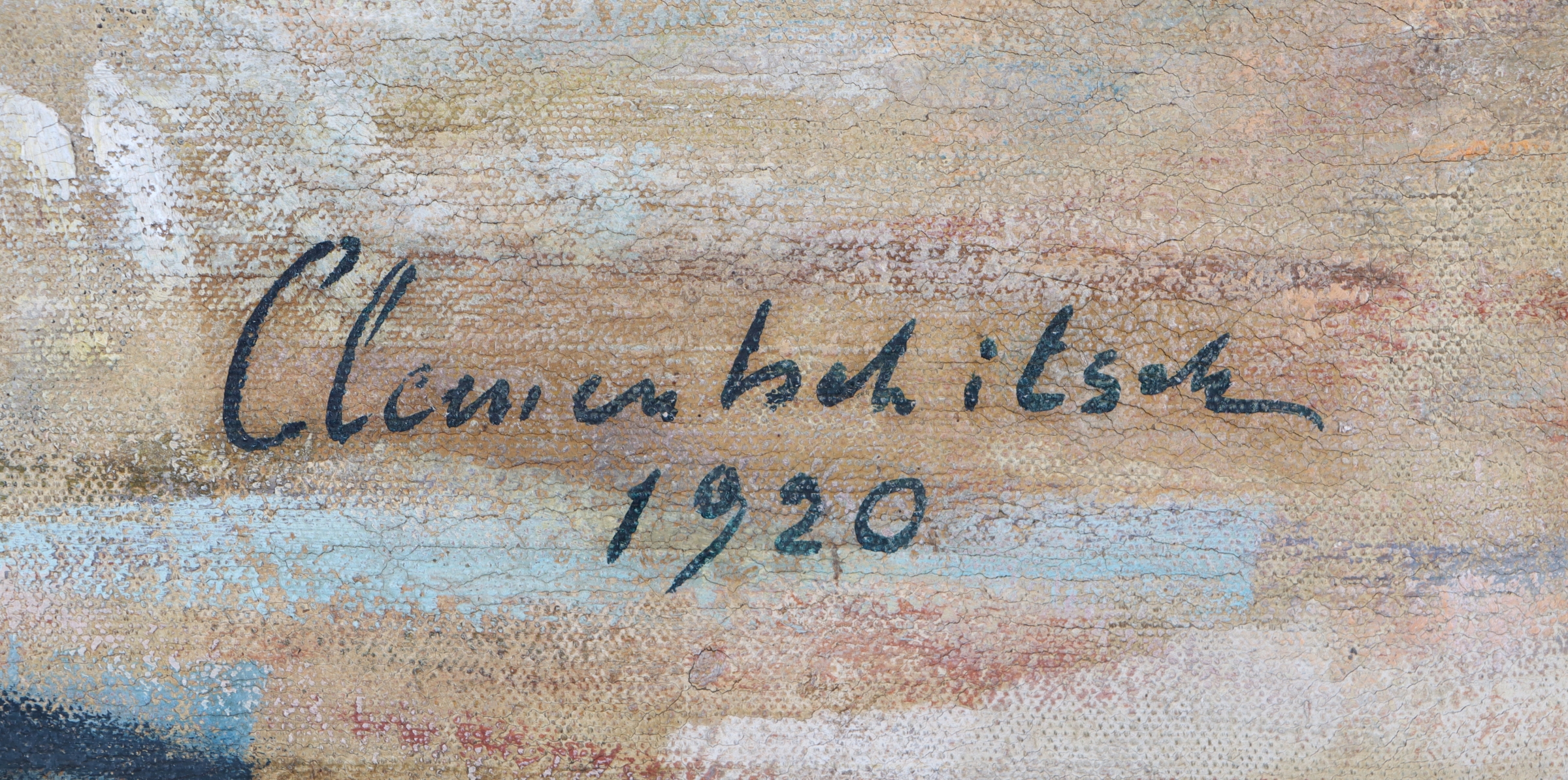
Signed and dated: Lower right “Clementschitsch 1920”
The presented work belongs to the series of street scenes that the artist developed at the turn of the 1910s and 1920s. It is a highly significant painting from his most valuable creative period. Works from this period and of such exceptional quality appear on the auction market only very rarely.
Provenance: Important private collection
Exhibited: 18th Venice Biennale, Italy, 1932 (according to information from the artist’s family)
Originality consulted with the artist’s family: Claudia Seelich-Mayerhofer, curator and great-grandniece of Arnold Clementschitsch, and Olivia Clementschitsch, great-great-niece of the artist and director of Kunstraum Villach
Expert report: PhDr. Rea Michalová, Ph.D.
The assessed work Street Scene is an original, entirely characteristic, and high-quality painting by the Austrian artist Arnold Clementschitsch, whose work was shaped by modernist influences encountered during his stays in Vienna, Munich, and France, and who—together with Wilhelm Thöny—is considered the only Austrian representative of the famous artistic movement Der Blaue Reiter.
According to information from the artist’s family, the painting was exhibited at the 18th Venice Biennale itself and represents a representative example of Clementschitsch’s painterly fresh, expressively dynamic style, drawing its motifs from the socially vibrant metropolises of Vienna, Munich, and Paris. His street scenes, among his most compelling works, first attracted attention in 1920 at an exhibition of the renowned Wiener Secession, with which he made his public debut.
With a visually confident hand, masterfully handling formal abbreviation and the capture of movement, Arnold Clementschitsch depicts here an attractive world of high society imbued with extraordinary period poetry.
About the artist:
Arnold Clementschitsch was born in 1887 in Villach, Carinthia, into the family of a lawyer. In 1908 he began studying at the Vienna Graphic School (under Prof. Hubert Landa, Erwin Puchinger, and Josef Eugen Hörwarter). Between 1909 and 1910 he continued simultaneously at the Academy of Fine Arts in Vienna and the School of Arts and Crafts under A. Delug and Berthold Löffler. He then moved to Munich, where he studied at the Academy of Fine Arts from 1911 to 1915. In 1915 he was conscripted into military service. After the end of the war, he settled near Lake Ossiach in his native Carinthia. He undertook study trips primarily to Italy and France.
Initially influenced by the Vienna Secession, Clementschitsch developed his own original painterly style during the 1920s. Under the influence of German Expressionism and the Der Blaue Reiter group, his work came to be dominated by remarkably intense colors. His street scenes, paintings of horses, and atmospheric landscapes around Lake Ossiach became particularly renowned. He was also a sought-after portraitist.
He made his public debut in 1920 at an exhibition of the Wiener Secession; in 1928 he was represented at the World Exhibition in Barcelona. In 1932 he received an award at the 18th Venice Biennale for the painting The Polo Player. In 1937 he became an honorary citizen of Villach. In 1946 he was appointed professor, and in 1963 he received the Austrian State Prize. Arnold Clementschitsch died in 1970 in Villach.
Other products
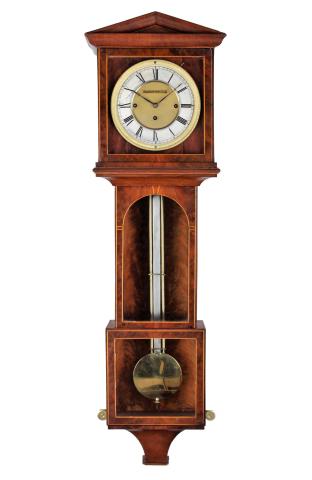
Miniature wall clock - Laterndluhr
Wall-mounted pendulum clock, so-called lantern clock, circa 1830, Vienna; dial signed I. Vlaschitz in Wn. Neustadt (Ignatz Vlaschitz in Wien Neustadt).
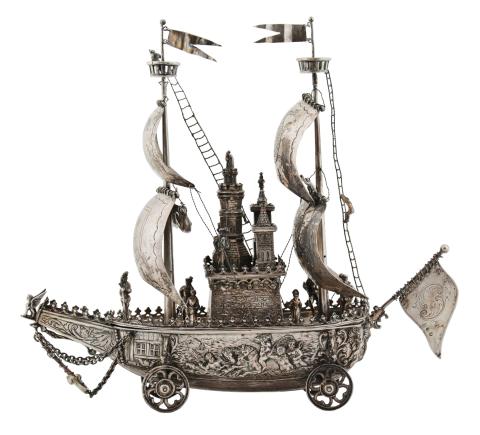
Silver model of a ship with figural decoration
Germany, Hanau, 19th century. Two-part silver model of a ship with rich figural and sculptural decoration, comprising a total of 12 figures.
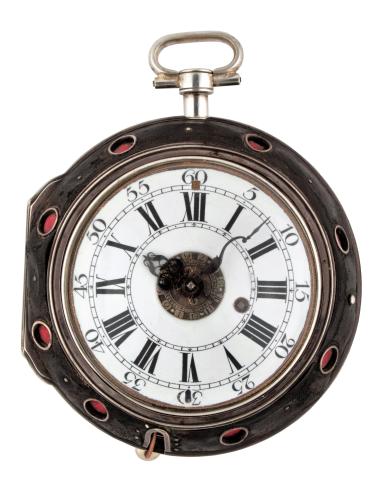
Large Baroque carriage clock – Joseph Spiegel
Germany, Friedberg, Joseph Spiegel (Joseph Miroir), circa 1740. Large double-cased traveling striking clock with date display and alarm.
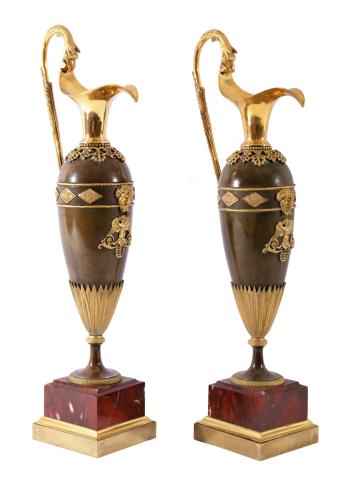
Pair of Empire teapots – Claude Galle
France, Paris, circa 1810. A luxurious pair of bronze ewers produced in the renowned workshop of Claude Galle (1759–1815).