
Gallery
Unique astronomical longcase clock
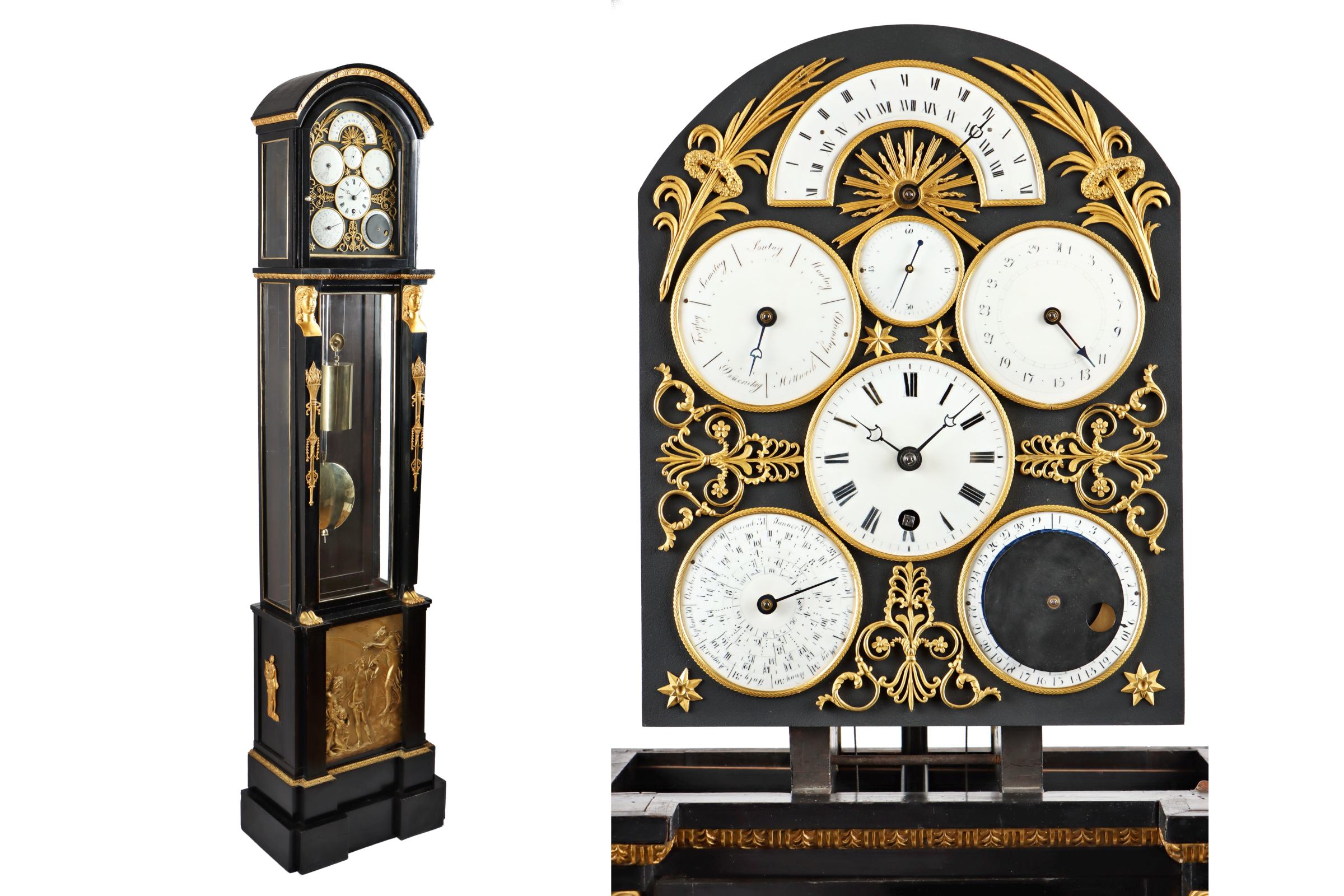
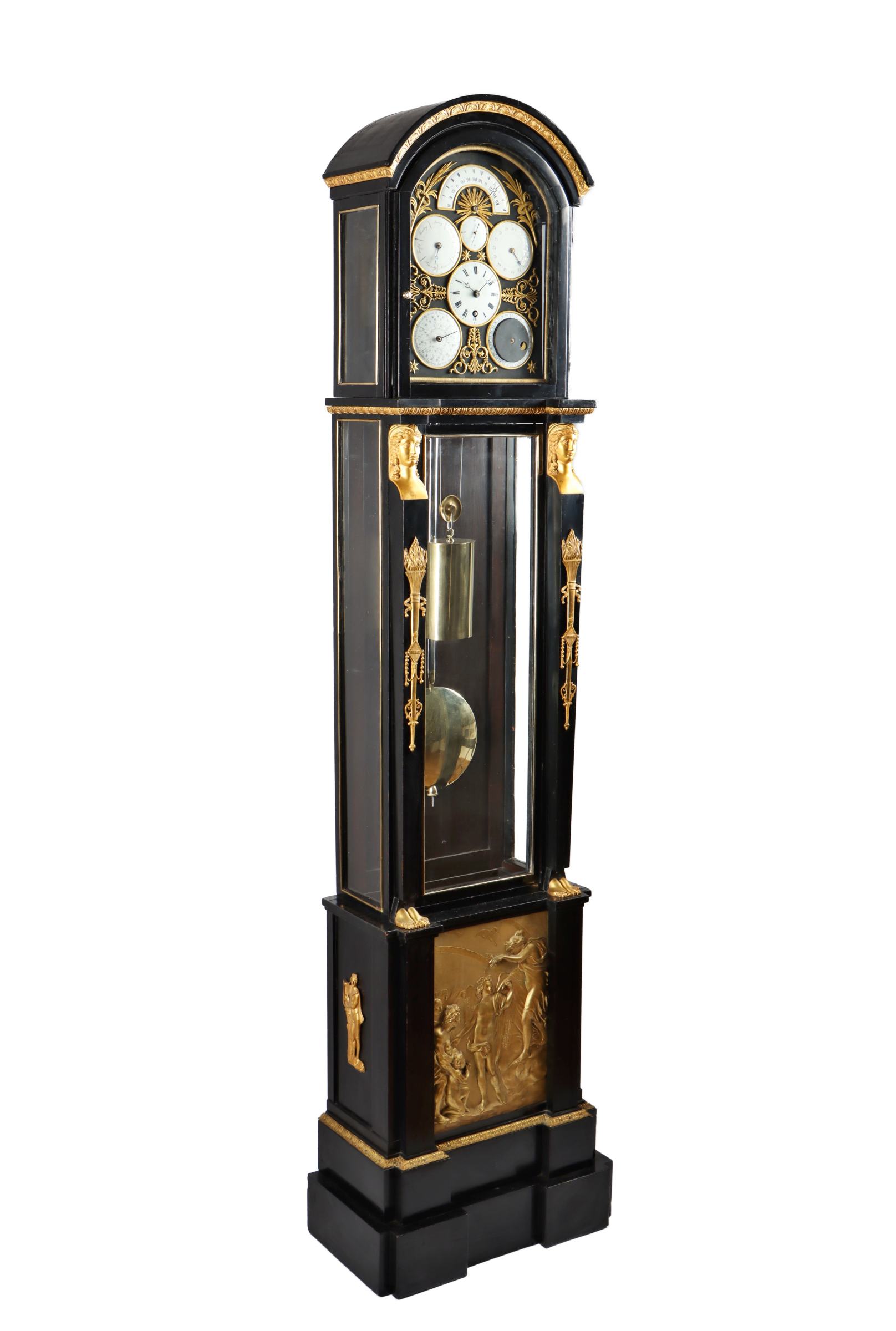
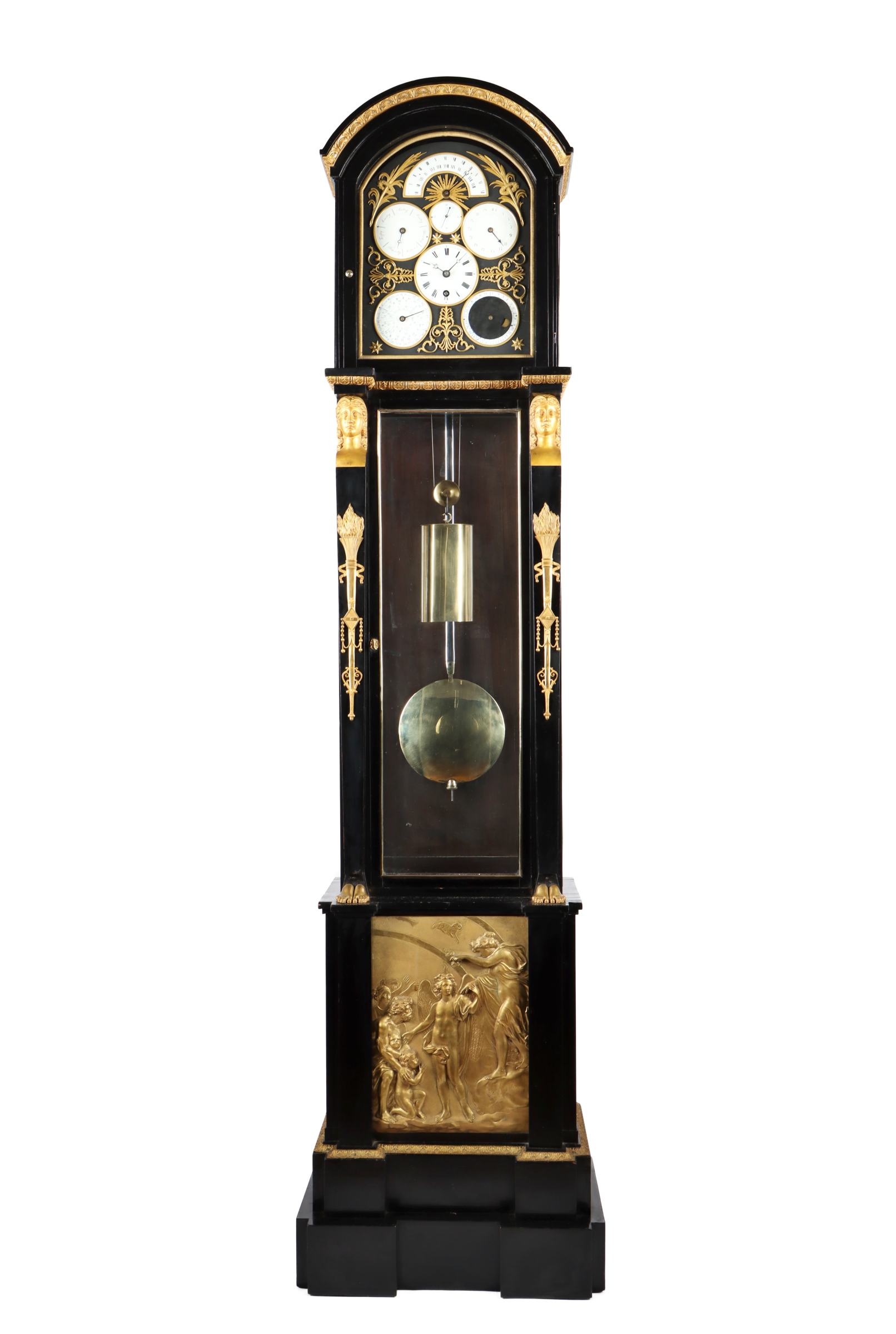
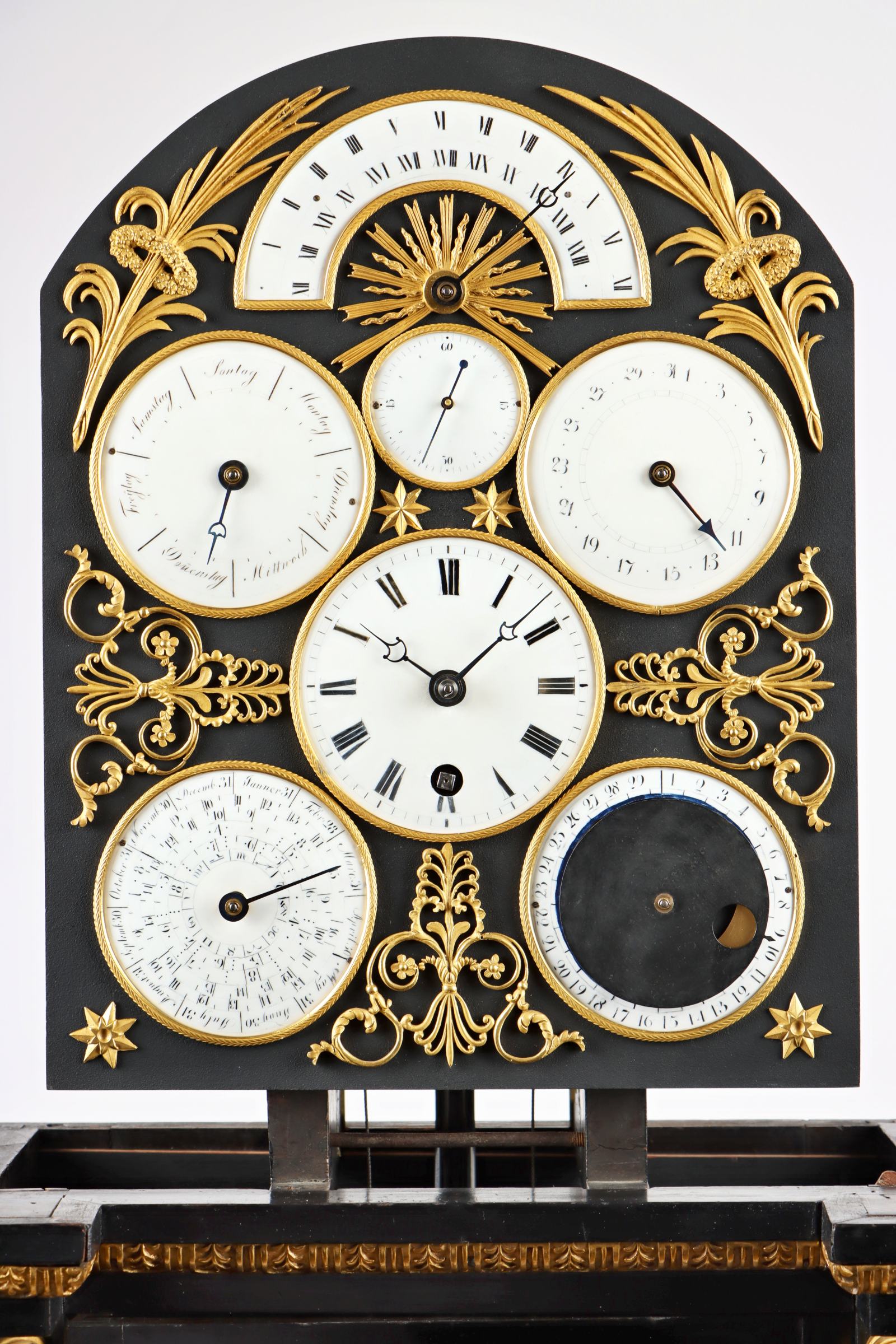
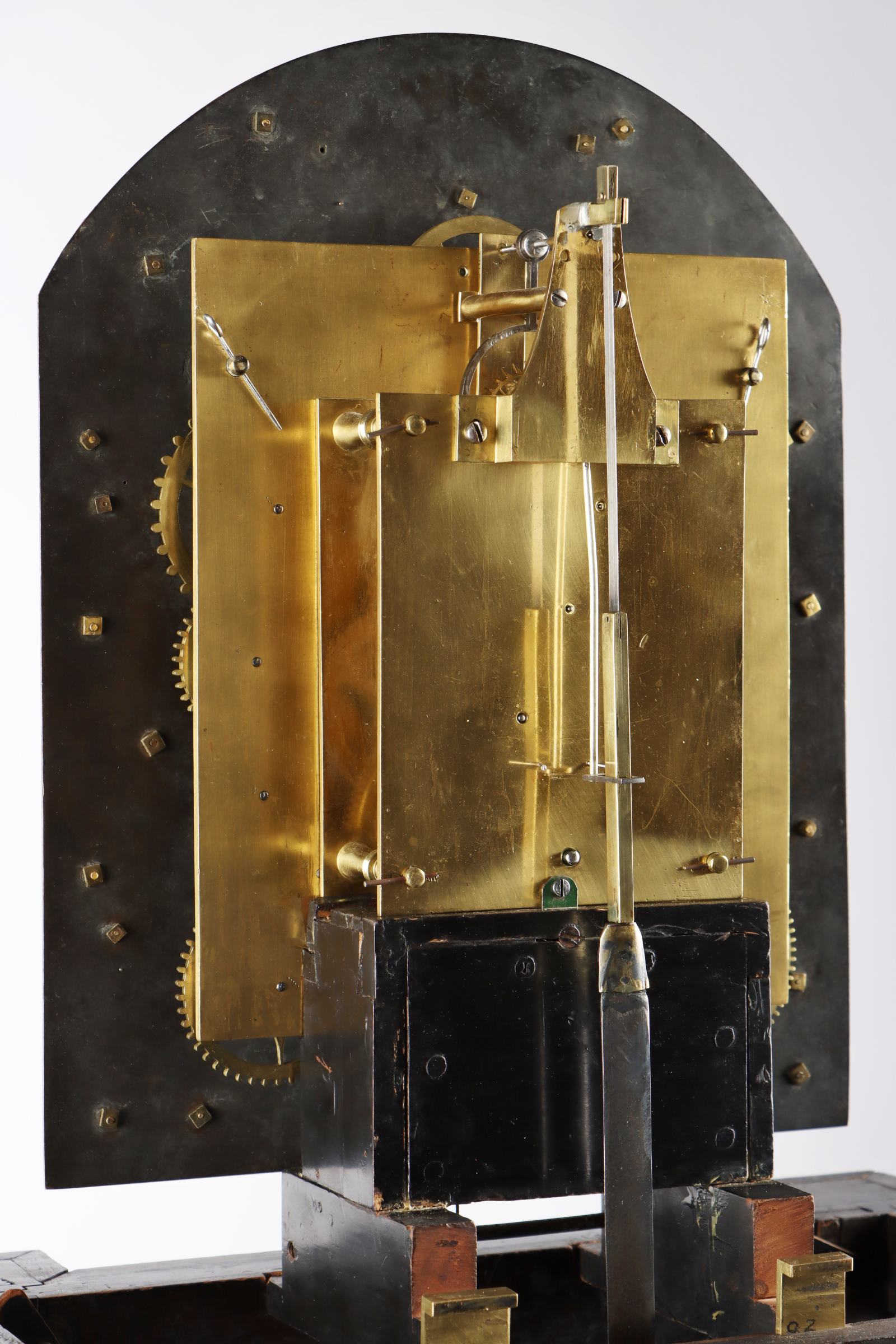
Austrian Empire, probably Vienna, circa 1815, Unique Empire longcase clock with one month duration, calendars and astronomical indications, partially glazed ebonized hardwood case is richly adorned with fire-gilt bronze mounts, base of the case is decorated with a bronze plaque featuring a relief figural scene allegorizing the arrival of spring, wrought-iron dial plate with black polychromy is fitted with seven white enamel subsidiary dials, area between them is ornamented with fire-gilt bronze mounts, clock has blued steel hands and displays seconds, minutes, hours, day and night time on a retrograde scale, day of the week, day of the month, month of the year, length of the month, zodiac signs, lunar phases, and the day of the lunar month, brass movement with Graham escapement and extended running time of up to 31 days on a single winding, overall dimensions 214 × 54 × 30 cm.
These exceptionally rare longcase clocks from the first third of the 19th century rank among the most remarkable collectors’ objects of their kind and represent a supreme example of horological art in the French Empire style. Within the Austrian Empire, clocks of this type were produced only on the rarest of occasions, as highly demanding bespoke commissions intended for the wealthiest aristocratic families and royal courts. Their exclusive character is underscored not only by their complex technical execution and refined formal design, but also by the fact that they were luxury objects intended to represent the social standing, cultural sophistication, and material prestige of their owners.
Surviving examples of clocks of this type can today be found only in a small number of important aristocratic and museum collections, and they are virtually unobtainable on the art market. It is precisely this extraordinary rarity, combined with their outstanding artistic craftsmanship, that makes these clocks objects of truly exceptional collector’s value.
Other products
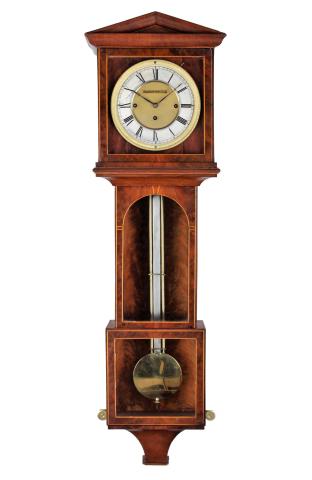
Miniature wall clock - Laterndluhr
Wall-mounted pendulum clock, so-called lantern clock, circa 1830, Vienna; dial signed I. Vlaschitz in Wn. Neustadt (Ignatz Vlaschitz in Wien Neustadt).
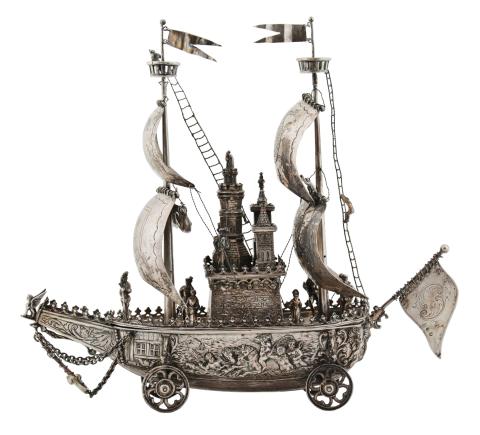
Silver model of a ship with figural decoration
Germany, Hanau, 19th century. Two-part silver model of a ship with rich figural and sculptural decoration, comprising a total of 12 figures.
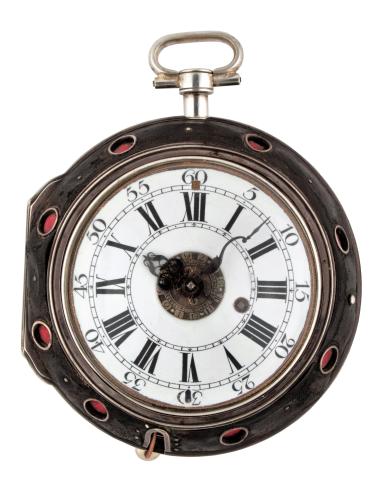
Large Baroque carriage clock – Joseph Spiegel
Germany, Friedberg, Joseph Spiegel (Joseph Miroir), circa 1740. Large double-cased traveling striking clock with date display and alarm.
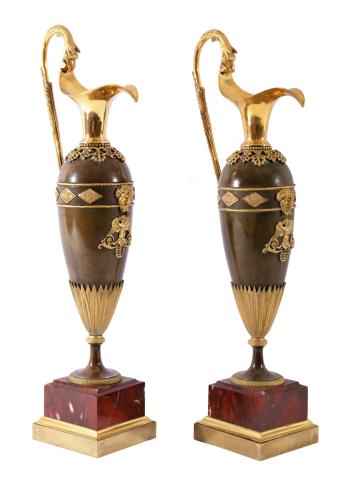
Pair of Empire teapots – Claude Galle
France, Paris, circa 1810. A luxurious pair of bronze ewers produced in the renowned workshop of Claude Galle (1759–1815).