
Gallery
Very rare chinese archaistic gold and silver-inlaid bronze vase, 17th century, Ming Dynasty
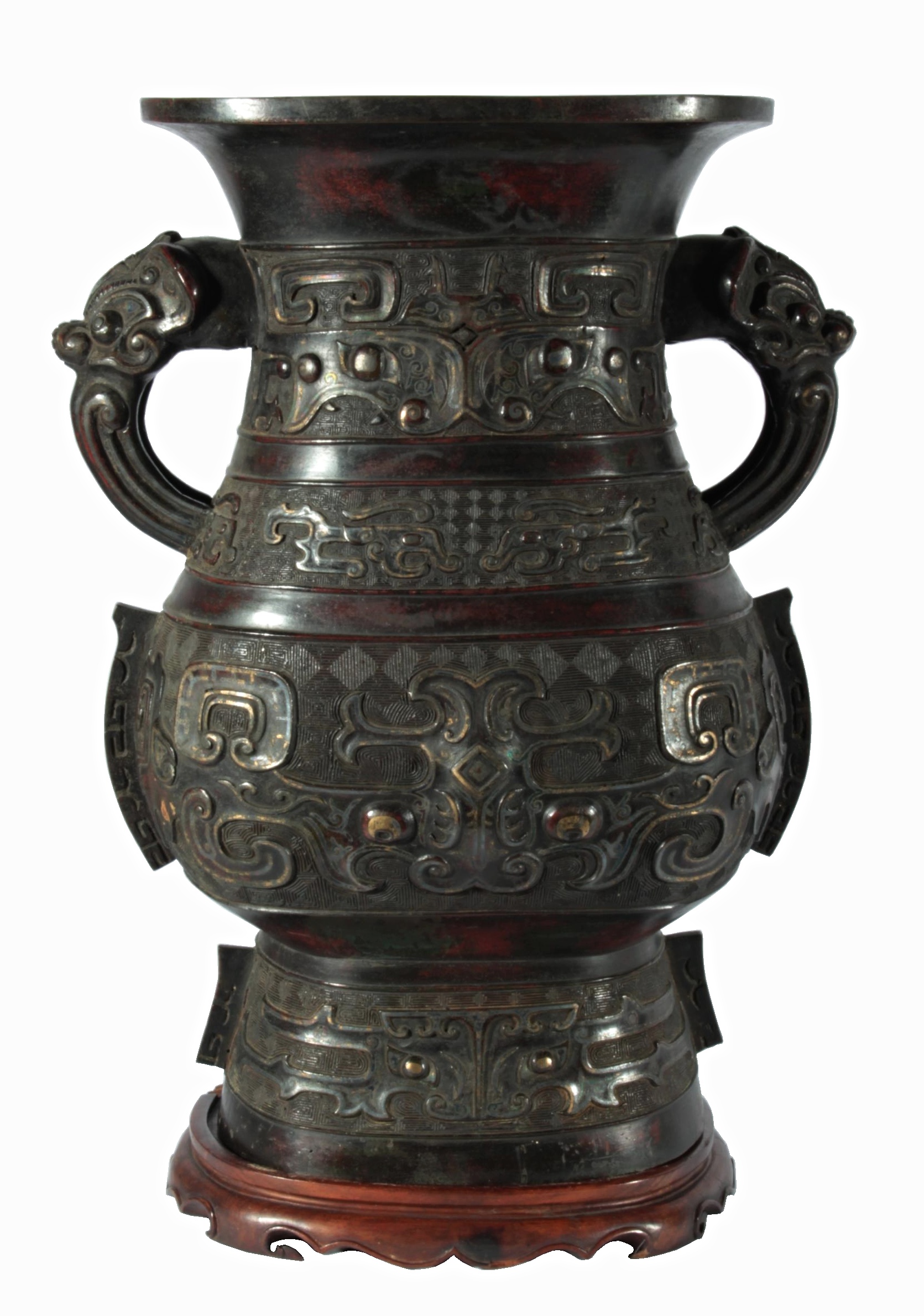
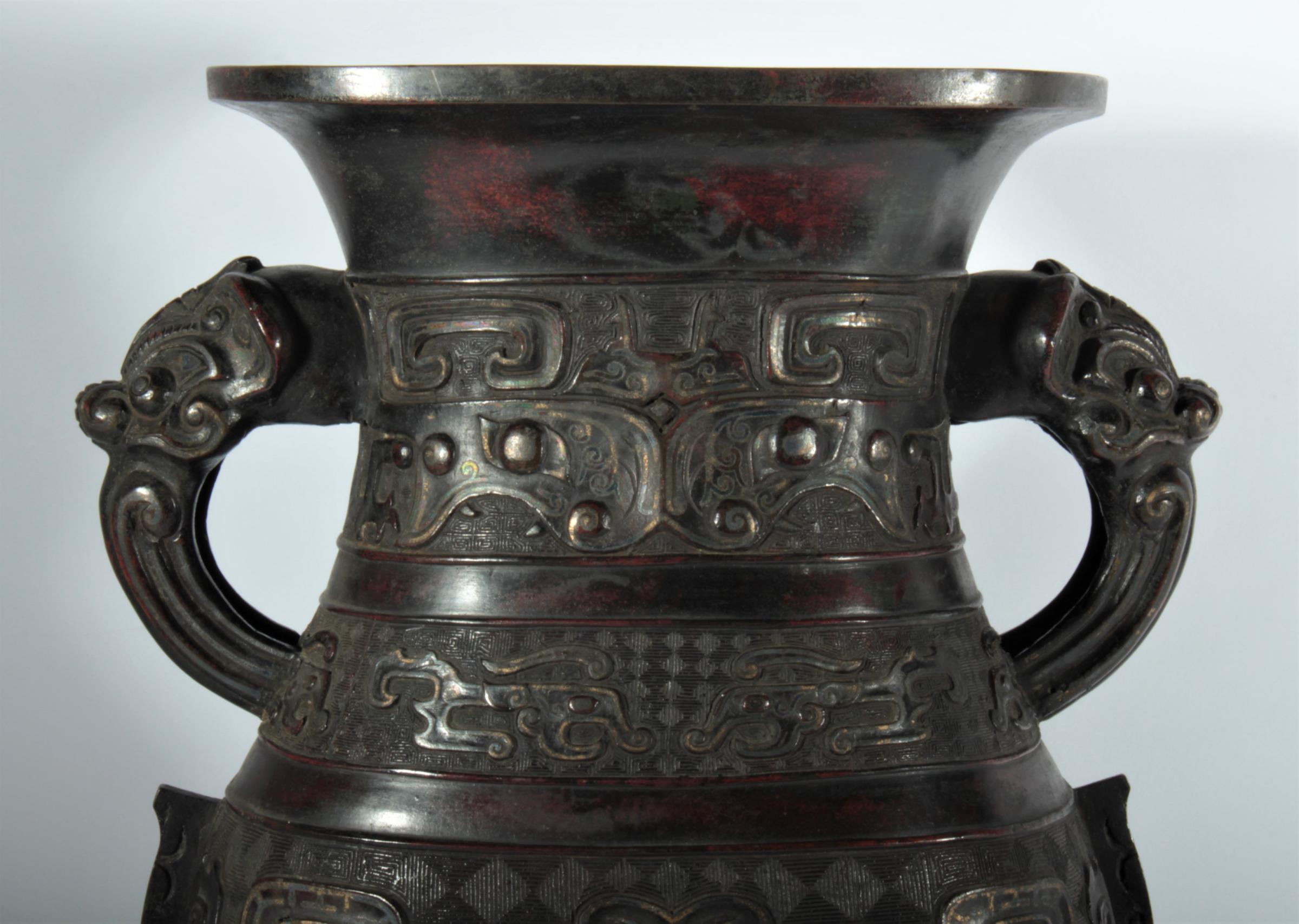
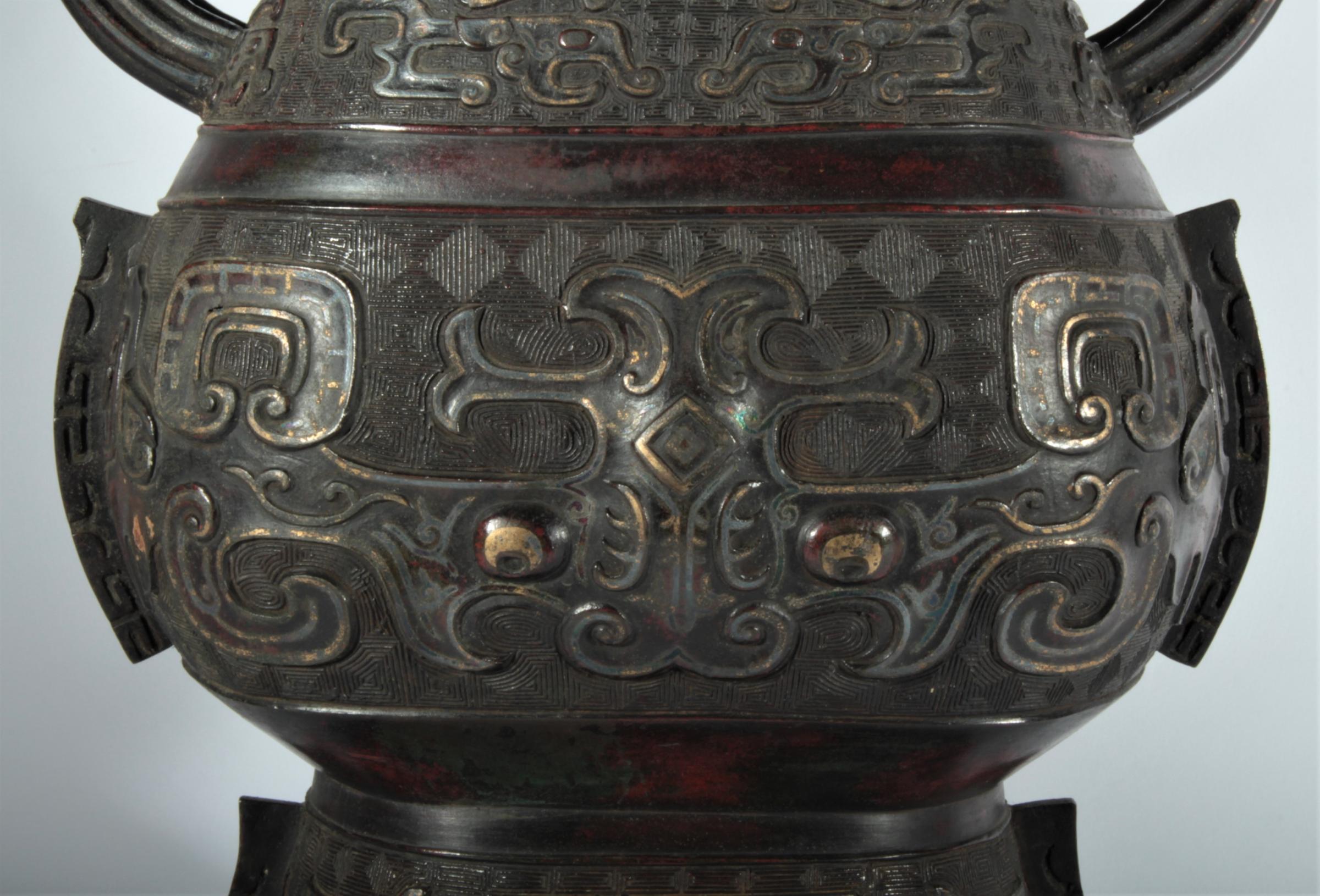
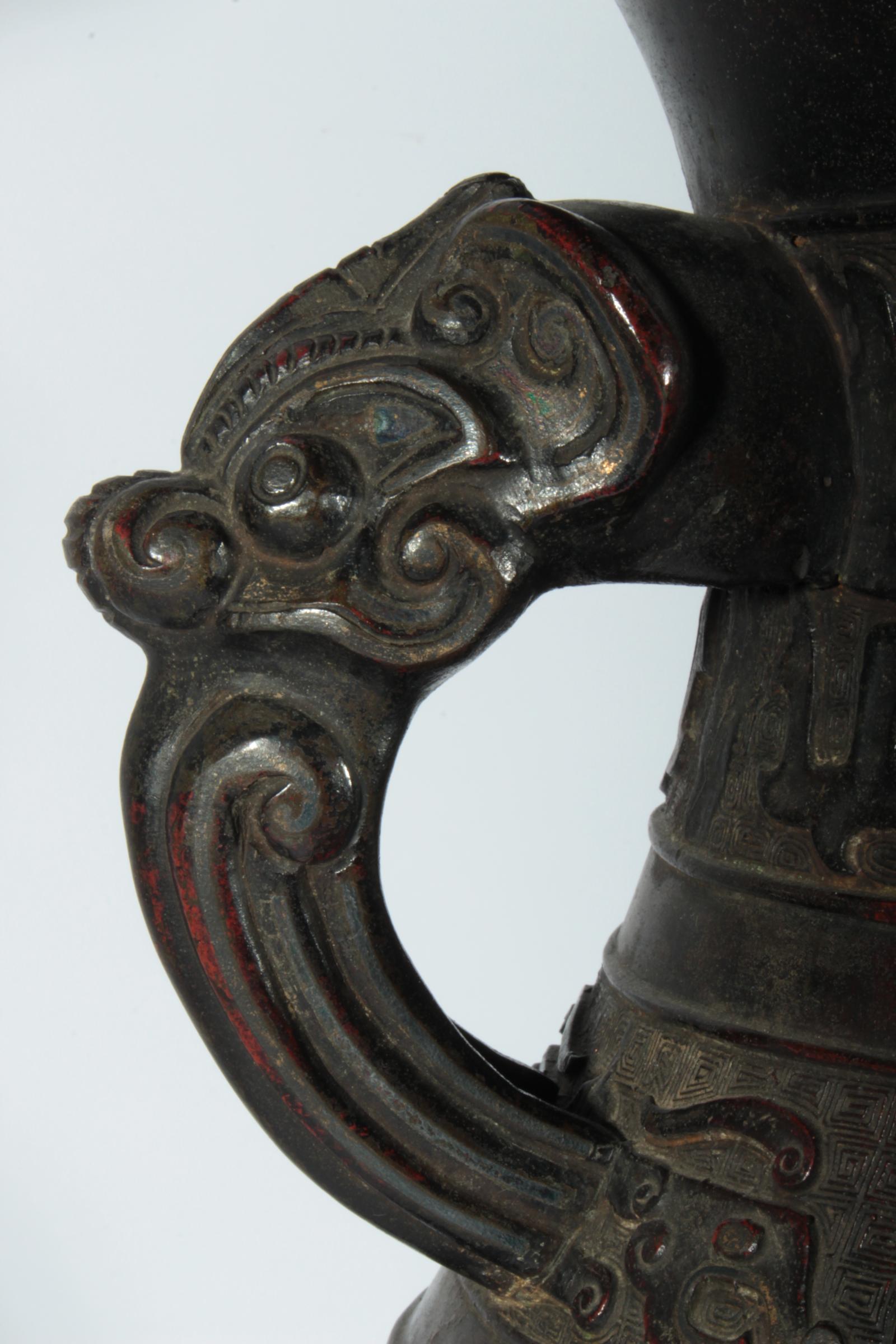
China, the late period of the Ming Dynasty (1368 - 1644) to the Kangxi era (1661-1722)Large bronze vase in archaic style in the form of a ritual wine vase HU, high quality bronze casting, precisely hand-machined, partially inlaid with silver and partially gilded, patinated, the surface bears a plastic decor of hui wen meanders, geometric elements and taotie mascarons with snake body, decorative field is located in four sections on the pedestal and the body of the vessel, two opposite symmetrical ears are in the plastic form of the heads of mythical animals, similar to their ancient designs, the standing seam originally created by casting technology, becomes the bearer of decor.
This beautiful bronze vase comes from late period of the Ming dynasty (1368 - 1644) or from the beginning of the Qing Dynasty in the Kangxi era. Excellent quality of execution is typical for this era, Ming's works are usually less precisely refined and build more on the expressiveness of the archaic form. But if it was a production for the highest elites of society, perhaps even for the imperial court, where the perfection of processing was a categorical imperative, this vase could be an exceptional master piece of the end of the Ming dynasty.
Overall dimensions of the vase without a wooden base: 44 x 32 x 21 cm
Condition: the vase is in very good original condition with a charming original patina - uncleaned, wooden base made of hardwood - from later period,slightly damaged.
Provenance: originally from a very high quality collection - from a family cooperating with President Tomáš Garrigue Masaryk